
Latest from the blog

Shadow clones: four Muay Thai techniques learnt in parallel
Instead of teaching one fighter every new technique in turn, I copied the latest model into one-technique teachers on rented GPUs, then distilled what they learnt back into a single student. Three techniques came back; some clones finished training and were still wrong.

Two fighters and vision: GPU against CPU, optimised
The blocking training has two fighters, vision and a teacher network, so the GPU-against-CPU test was run again on an RTX 5090 and a 96-vCPU EC2 spot machine. After optimising both, the GPU trains it about 3.2 times cheaper per iteration, and faster.

Training on a rented GPU: four and a half times cheaper
Spot CPU machines on EC2 were getting expensive. Moving the fighter's physics onto a GPU, tuning the code for it and trying nine graphics cards cut the cost of training the stance by about 4.5 times.
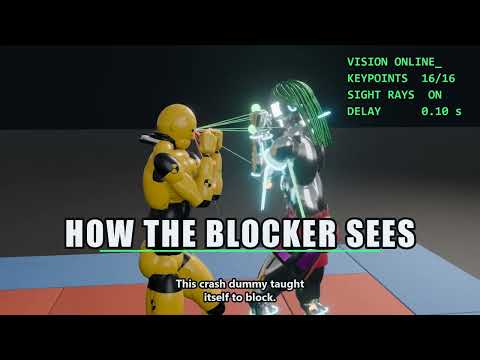
Blocking: reading a punch you see a tenth of a second late
Twenty runs taught the fighter four Muay Thai blocks, then to watch an opponent and pick the right one. Four times it found a giveaway in the opponent instead of reading the punch.
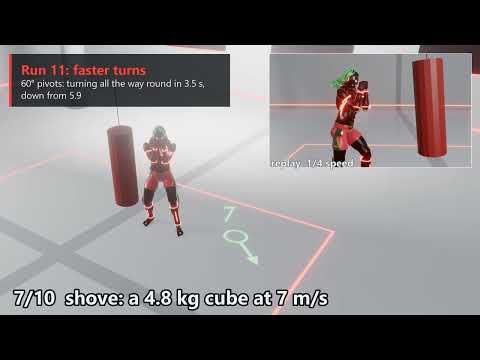
Footwork: walking to a spot in a Muay Thai stance
Twenty-two runs taught the fighter to step forward, back, sideways and diagonally, and to pivot, without forgetting its punches. Then every rule about how the walk should look made it walk worse.
More videos are on our YouTube channel.